




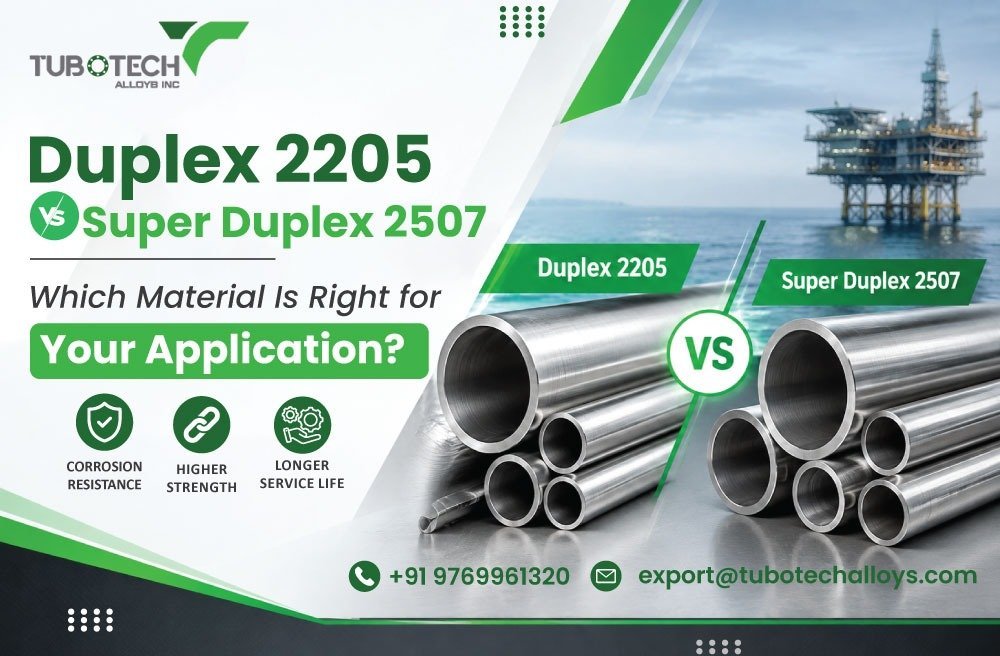
Duplex 2205 vs Super Duplex 2507: Which Material Is Right for Your Application?
Selecting the best stainless steel for your industrial applications involves more than just comparing strength and resistance to corrosion. The choice of material affects the lifespan of equipment as well as fabrication requirements, maintenance, operational reliability, and the overall cost of the project. Two of the most important options are super duplex 2507, both of which are known for their infusion of ferritic and austenitic microstructures.
Which is best for your needs? The answer is dependent on where the material will be used, how, why, and who will use the product.
The guide provided by Tubotech Alloys Inc. explains the important distinctions between duplex 2205 and super duplex 2507 to help the procurement team, engineers, fabricators, and industrial buyers make an informed decision about the best material for their needs.
What Are Duplex 2205 and Super Duplex 2507?
Duplex 2205 stainless is a popular duplex stainless steel with around 22% chromium, with nitrogen and molybdenum additions that offer excellent resistance to corrosion as well as strength and weldability. The two-phase balanced microstructure that it has blends the advantages of ferritic and austenitic stainless steels.
Super duplex 2507, also known as UNS S32750, is made up of greater amounts of chromium, molybdenum, as well as nitrogen than 2205. This chemical composition gives it significantly more resistance to corrosion caused by chlorides, crevice corrosion, pitting, and cracking due to stress corrosion.
In simplest terms, Duplex 2205 is a great general-purpose duplex grade. Super duplex 2507 is specifically designed for higher-strength and more corrosive environments.
Why Compare Duplex 2205 vs Super Duplex 2507?
The principal reason to compare these two materials is that they offer an impressive combination of corrosion resistance and strength; however, they are at different levels of performance.
Duplex 2205 could provide an attractive balance of costs and performance for a variety of applications. Super Duplex 2507 can usually be chosen when the environmental conditions are much more aggressive or if more mechanical strength is required.
The best choice must be based on real operational conditions, rather than choosing the one with the highest quality.
Where Is Duplex 2205 Stainless Steel Used?
The Duplex 2205 stainless steel is usually thought of for use in areas in which resistance to corrosion and mechanical loads are crucial. The most common uses include:
- Equipment for processing oil and gas
- Chemical processing systems for chemical processing
- Pressure vessels
- Heat exchangers
- Storage tanks
- Piping systems
- Marine equipment
- Desalination equipment
- Structural components
- Equipment to control pollution
Its blend of durability, resistance to corrosion, and good weldability makes it an extremely versatile engineering material.
Where Is Super Duplex 2507 Used?
Super Duplex 2507 was designed to be used in more challenging environments. Its greater alloy content is especially useful when exposure to chlorides, seawater pressure, and mechanical stress causes challenging conditions for service.
The most common applications are:
- Equipment for offshore oil and gas
- Seawater systems
- Desalination plants
- Chemical processing equipment
- High-pressure pipe
- Heat exchangers
- Marine applications
- Systems for treating flue gas
- Process equipment that is exposed to chlorides
- Production components for oil and gas
For environments that contain a lot of chloride, Super Duplex 2507 can give better corrosion resistance than duplex 2205.
Duplex 2205 vs Super Duplex 2507: Key Differences
| Property | Duplex 2205 | Super Duplex 2507 |
| General level of alloy | Lower | Higher |
| Chromium | Approximately 22% | Approximately 25% |
| Molybdenum | Approximately 3% | Approximately 4% |
| Nitrogen | Lower | Higher |
| Strength | High | Very high |
| Resistance to corrosion | Excellent | Extremely high |
| Resistance to Chloride | Excellent | Superior |
| Pitting resistance | High | Very high |
| The typical cost | Generally speaking, the cost is lower | Generally speaking, the rate is higher |
| Marine service with severe consequences | In many instances, it is suitable. | Often preferred |
| Fabrication | Very manageable | More control is required. |
The precise chemical and mechanical specifications should always be checked against the relevant material standard and form of the product, as well as heat treatment and specification.
How Does Corrosion Resistance Compare?
One of the major distinctions between duplex 2205 and super duplex 2507 concerns corrosion performance.
Duplex 2205 offers strong resistance to general corrosion as well as cracking caused by chloride stress corrosion and a variety of particular corrosion mechanisms. However, certain environments with excessive levels of chloride, higher temperatures, or especially hazardous chemicals can require more corrosion resistance.
Super duplex 2507 has higher molybdenum, chromium, and nitrogen levels. These alloying elements enhance its resistance to pitting as well as crevice corrosion, and enhance its performance in challenging chloride-rich environments.
For extreme offshore and seawater conditions, Super duplex 2507 could thus provide an additional performance margin.
How Do Strength and Mechanical Properties Differ?
Both grades have significantly higher durability than standard austenitic stainless alloys.
Duplex 2205 is prized due to its strength and yield strength and its ability to reduce the thickness of the material in certain engineering designs.
Super duplex 2507 usually offers even greater mechanical strength and also has outstanding corrosion resistance. This is particularly beneficial in high-pressure systems, or in applications where structural strength is an important design factor.
But, greater strength doesn’t mean that 2507 is the best option. If the extra performance isn’t needed, Duplex 2205 could be an economical alternative.
When Should You Choose Duplex 2205?
Choose Duplex 2205 if your application calls for:
- Strong resistance to corrosion
- High mechanical strength
- Excellent resistance to stress from chloride corrosion cracking
- Balance between cost and performance
- Large industrial application
- Fabrication characteristics and weldability that are appropriate
For a variety of applications in the fields of chemical as well as oil and gas industrial, marine and marine uses, the duplex 2205 is a powerful combination of properties that does not require moving to a more alloyed material.
When Should You Choose Super Duplex 2507?
Super duplex 2507 might be the best choice if:
- The surrounding environment is contaminated with large amounts of chloride.
- Exposure to seawater is important.
- Crevice corrosion or pitting is a major cause of concern.
- More mechanical strength is needed.
- The equipment works under extremely high temperature and pressure conditions.
- A larger corrosion resistance margin is justified by the purpose of the application.
The greater initial cost for materials could be justified if increased service life, reliability and resistance to corrosion are essential.
Who Should Be Involved in Material Selection?
The selection of materials should involve designers, corrosion experts, Fabricators, procurement specialists, and the material provider.
The choice should be based on chemical composition, operating temperatures, pressure, chloride concentration, mechanical demands, welding requirements, fabrication techniques and standards that are applicable, the expected service life, and the total lifecycle cost.
A supplier of materials like Tubotech Alloys Inc can help buyers choose the right quality and form of the product according to the project specifications.
Which Material Is Right for Your Application?
There isn’t a universal winner in the super duplex 2507 competition.
The Duplex 2205 stainless steel material is usually the best option when you require an extremely durable, corrosion-resistant product that has a wide range of industrial applications and an optimum cost-performance profile.
Super duplex 2507 is more appealing when the use involves severe exposure to chloride or seawater, challenging offshore conditions, more mechanical stress, or a higher need for resistance to corrosion that is localized.
The most suitable material is the one that is able to meet the technical specifications of the application while ensuring an equilibrium of performance, fabrication, availability, and lifecycle cost.
Super duplex 2507 offers the most advanced stainless steel solutions available for the most demanding industries. Duplex 2205 is a great combination of strength as well as weldability, corrosion resistance, and value. Super duplex 2507 provides a higher degree of corrosion resistance and mechanical performance to withstand a more demanding environment of service.
If buyers are weighing superduplex 25,07 their choice should be based on operating conditions and not just the grade of the material. When you consider corrosion exposure, pressure, temperatures, fabrication requirements, mechanical requirements, and lifecycle specifications and requirements, you can pick the best grade for your needs.
Tubotech Alloys Inc can support selecting the right material and source requirements in duplex stainless steel as well as other alloys, helping customers find solutions that are suitable for the most demanding industrial requirements.
1. What’s the distinction between super duplex 2507?
Super duplex 2507 is a stainless steels that have two phases; however, 2507 has more chromium, molybdenum, as well as nitrogen. In turn, super duplex 2507 typically has higher strength and better resistance to crevice corrosion, pitting corrosion, and chloride-rich environments.
2. Is super duplex 2507 more powerful than duplex 2205?
Yes. Super duplex 2507 typically has greater physical strength than duplex 2205. However, the strength requirement must be assessed against the design specifications for the application prior to choosing the material of higher grade.
3. Is duplex 2205 stainless steel suitable for use in seawater?
Duplex 2205 is suitable for a variety of applications involving seawater and marine environments, depending on the particular environment temperatures, chloride concentration, flow conditions, and design specifications. More aggressive seawater service may favor super duplex 2507.
4. What is more costly? super duplex 2205 or duplex 2507?
Super duplex 2507 typically costs more due to its greater amounts of alloying elements, and also provides better performance. However, the overall project cost must include life-cycle and maintenance, as well as fabrication risk, corrosion risk, and repair cost.
5. Which one should I pick between super duplex 2205 and duplex 2507?
Examine the exposure to chloride corrosion, conditions for corrosion, operational temperature, pressure, mechanical loads, as well as welding and fabrication requirements, as well as the applicable standards, their availability, and lifecycle costs. Duplex 2205 is usually suited for moderately demanding tasks. Super duplex 2507 is typically deemed to be suitable for more demanding environments.